mardi 6 août 2013

lundi 5 août 2013
Joel Teitelbaum, né le 13 janvier 1871 à Máramarossziget et décédé le 19 août 1979 à New York2,3, était un Grand-Rabbin hassidique hongrois, fondateur de la dynastie hassidique de Satmar.
Les grands maîtres du hassidisme: Yisroel Baal Shem Tov (1698-1760), fondateur du hassidisme son disciple, Rabbi Dov Baer de Mezeritch(1710-1772), le Maguid de Mezritch son disciple, Rabbi Elimelekh de Lizhensk (1717-1786), Le Noam Elimelekh son disciple, Rabbi Yaakov Yitzchak Horowitz(1745-1815), le Hozeh de Lublin .
..... et le Rabbi Yoel Rabbi Joël Teitelbaum (1887-1979), Satmar Rebbe, auteur de Divrei Yoël et VaYoel Moshe .....
Joel Teitelbaum rabbin de Irchava en Ukraine puis appelé au rabbinat de Carei en Roumanie, avant de s'installer en 1929 à Szatmárnémeti où il crée et dirige la communauté hassidique de Satmar. Durant la Shoah, bien que le mouvement n'ait pas été complètement anéanti, beaucoup de hassidim Satmar sont assassinés et déportés durant la Seconde Guerre mondiale. À l'arrivée des nazis, les membres de la communauté organisent le déplacement de leur rabbi vers Cluj-Napoca, où il est arrêté et transféré dans un ghetto.
En juin 1944, Rudolf Kastner négocie avec les SS l'autorisation pour 1 684 Juifs de quitter la Hongrie pour la Suisse, en échange d'argent, d'or et de diamants, dans ce qui sera appelé le "train de Kastner". Yoel Teitelbaum est un des passagers de ce train, qui est dérouté vers Bergen-Belsen pendant six mois avant d'être autorisé à continuer jusqu'à la frontière suisse, comme prévu initialement. Le 21 Kislev 5705 (1944), le jour où le rabbin Teitelbaum traverse la frontière suisse et échappe aux nazis, est célébré comme un jour férié par les Hassidim de Satmar.
Après la guerre, le rabbin Teitelbaum séjourne quelque temps dans le camp de personnes déplacées de Feldafing (Arrondissement de Starnberg). Le sauvetage de Joel Teteilbaum est sujet à controverse. En effet, les sionistes lui reprochent d'avoir accepté d'être épargné alors que sa communauté mourait dans les camps et les groupes anti-sionistes lui reprochent de s'être allié aux sionistes dans ce sauvetage. Le Rabbi a, quant à lui, écrit une revue Al hagueoula veal Atemoura (Sur la Rédemption et sur la Donation), dans laquelle il répond à ces accusations. En 1945, Joël Teitelbaum monte en Palestine alors sous mandat britannique. Il séjourne à Jérusalem où il fonde une yeshiva.
Fin 1946, il collecte des fonds aux États-Unis, où il rencontre les membres de son ancienne communauté qui ont survécu à la Shoah. Ceux-ci le convainquent de s'installer aux États-Unis. En quelques années, Teitelbaum transforme sa petite communauté en un mouvement mondial dont le siège est à Williamsburg, New York. Dans les années 1970, Kiryas Joel, un village dans le comté d'Orange, New York, est créé pour les adeptes du mouvement.
L'opposition de Satmar à l'État d'Israël est fondée sur leur conviction que la création d'un État juif par les Juifs est un blasphème. Ils croient que les Juifs doivent attendre que Dieu envoie le Messie pour que le peuple juifs puissent retourner en terre d'Israël.
Son opposition au sionisme moderne est celle des trois serments mentionnés dans le Talmud (Ketoubot 110b-111a), qui traite d'un passage du Cantique des Cantiques, dans laquelle Dieu a fait les Israélites "promesse de l'attendre avant de susciter son amour"
Quels sont ces trois serments? Un, qu'Israël ne devrait pas monter en muraille Rachi interprète: avec force]. Deux, le Saint-béni-soit-Il a fait jurer à Israël de ne pas se rebeller contre les nations du monde. Trois, le Saint-béni-soit-Il a fait jurer aux nations de ne pas opprimer Israël trop durement. Le Midrash est en grande partie une analyse exégétique de trois versets séparés du Cantique des Cantiques (2:7, 3:5 & 8:4), et reflète naturellement l'interprétation traditionnelle, qui considère le livre entier comme une allégorie de la relation entre Dieu et le peuple juif : הִשְׁבַּעְתִּי אֶתְכֶם בְּנוֹת יְרוּשָׁלַיִם בִּצְבָאוֹת, אוֹ בְּאַיְלוֹת הַשָּׂדֶה, אִם-תָּעִירוּ וְאִם-תְּעוֹרְרוּ אֶת-הָאַהֲבָה, עַד שֶׁתֶּחְפָּץ ה הִשְׁבַּעְתִּי אֶתְכֶם בְּנוֹת יְרוּשָׁלַיִם בִּצְבָאוֹת, אוֹ בְּאַיְלוֹת הַשָּׂדֶה, אִם-תָּעִירוּ וְאִם-תְּעוֹרְרוּ אֶת-הָאַהֲבָה, עַד שֶׁתֶּחְפָּץ הִשְׁבַּעְתִּי אֶתְכֶם בְּנוֹת יְרוּשָׁלַיִם, מַה-תָּעִירוּ וּמַה-תְּעֹרְרוּ אֶת-הָאַהֲבָה, עַד שֶׁתֶּחְפָּץ Je vous en conjure, ô filles de Jérusalem, par les biches et les gazelles des champs: n'éveillez pas, ne provoquez pas l'amour, avant qu'il le veuille. Je vous en conjure, ô filles de Jérusalem, par les biches ou les gazelles des champs: n'éveillez pas, ne provoquez pas l'amour, avant qu'il le veuille! Je vous conjure, filles de Jérusalem, n'éveillez pas, ne provoquez pas l'amour avant qu'il le veuille.
Le Rabbi de Satmar soutient que Maïmonide a parlé des trois serments comme contraignants: Les serments sont entre le peuple juif et Dieu, et les gentils, et Dieu, respectivement. Le fait que les gentils violent leur serment ne signifie implicitement que le peuple juif soit libre de le violer. Vivre en Eretz Israel n'est pas une mitsva générale pour la collectivité, mais uniquement sur l'individu.
samedi 3 août 2013
mercredi 24 juillet 2013
vendredi 12 juillet 2013
LE TOURNAGE DU JUIF DE LASCAUX EST TERMINé/ musique (1)

un standard par gilles tordjman, c'est comme se lever au brésil à l'aube dans un film de SKORECKI
dimanche 7 juillet 2013
dylan 1975
i can hear the turning of the key/i’ve been deceived by the clown inside of me/ i thought that he was righteous but he’s vain/ oh, something’s a-telling me/ i wear the ball and chain/ my patron saint is a-fighting with a ghost/ he’s always off somewhere when I need him most/ the spanish moon is rising on the hill/ but my heart is a-tellin’ me/ i love ya still/ i come back to the town from the flaming moon/ i see you in the streets, i begin to swoon/ i love to see you dress before the mirror/ won’t you let me in your room one time ’fore I finally disappear? everybody’s wearing a disguise/ to hide what they’ve got left behind their eyes/ but me, i can’t cover what I am/ wherever the children go, i’ll follow them/ i march in the parade of liberty/ but as long as i love you i’m not free/ how long must i suffer such abuse/ won’t you let me see you smile one time before I turn you loose?/ i’ve given up the game, i’ve got to leave/ the pot of gold is only make-believe/ the treasure can’t be found by men who search/ whose gods are dead and whose queens are in the church/ we sat in an empty theater and we kissed I asked ya please to cross me off-a your list/ my head tells me it’s time to make a change/ but my heart is telling me I love ya but you’re strange/ one more time at midnight, near the wall/ take off your heavy makeup and your shawl/ won’t you descend from the throne, from where you sit?/ let me feel your love one more time before I abandon it ...
dedicated to bobby vee/bob dylan, st paul, 10 juillet 2013
vendredi 7 juin 2013
fifty years before: dylan 1963
well it ain't no use to sit and wonder why, babe/even if you don't know by now/an' it ain't no use to sit and wonder why, babe/it don't matter anyhow/ babe/when your rooster crows at the break of dawn/look out your window and I'll be gone/you're the reason I'm trav'lin' on/but don't think twice, it's all right/an' it ain't no use in turnin' on your light, babe/that light i never knowed/an' it ain't no use in turnin' on your light, babe/i'm on the dark side of the road/still wish there was somethin' you would do or say/to try and make me change my mind and stay/we never did too much talkin' anyway/so don't think twice, it's all right/it ain't no use in callin' out my name, gal/like you never did before/it ain't no use in callin' out my name, gal/i can't hear you anymore/i'm a-thinkin' and a-wond'rin' all the way down the road/i once loved a woman, a child i'm told/i give her my heart but she wanted my soul/but don't think twice, it's all right/i'm walkin' down that long, lonesome road, babe/where I'm bound, i can't tell/but goodbye's too good a word, gal/so i'll just say fare thee well/ iain't sayin' you treated me unkind/you could have done better but i don't mind/you just kinda wasted my precious time/but don't think twice, it's all right
dylan 1975
i can hear the turning of the key/i’ve been deceived by the clown inside of me/ i thought that he was righteous but he’s vain/ oh, something’s a-telling me/ i wear the ball and chain/ my patron saint is a-fighting with a ghost/ he’s always off somewhere when I need him most/ the spanish moon is rising on the hill/ but my heart is a-tellin’ me/ i love ya still/ i come back to the town from the flaming moon/ i see you in the streets, i begin to swoon/ i love to see you dress before the mirror/ won’t you let me in your room one time ’fore I finally disappear? everybody’s wearing a disguise/ to hide what they’ve got left behind their eyes/ but me, i can’t cover what I am/ wherever the children go, i’ll follow them/ i march in the parade of liberty/ but as long as i love you i’m not free/ how long must i suffer such abuse/ won’t you let me see you smile one time before I turn you loose?/ i’ve given up the game, i’ve got to leave/ the pot of gold is only make-believe/ the treasure can’t be found by men who search/ whose gods are dead and whose queens are in the church/ we sat in an empty theater and we kissed I asked ya please to cross me off-a your list/ my head tells me it’s time to make a change/ but my heart is telling me I love ya but you’re strange/ one more time at midnight, near the wall/ take off your heavy makeup and your shawl/ won’t you descend from the throne, from where you sit?/ let me feel your love one more time before I abandon it ...
dylan sings leonard cohen (1987)
leonard: about three, four years i think ... and what about you, bob, how long did it take you to write SAD EYED LADY OF THE LOWLANDS? .......
bob: huh, two , three hours i guess ...
lundi 3 juin 2013
bailes bros 1943/better than louvin brothers?
.... .... .... .... ..... ..... ....
the year i was born, the bailes brothers would record THAT .... very close to the sound the everly bros would try to reach fifteen years after ..(their version was recorded in 1958).
lundi 27 mai 2013
cantor aryeh leib rutman 1919 (jewish gospel at its best)
youtube 2013 / la musique de skorecki7


skorecki/sun ra 1965

new york 1965 (photo bernard gidel) il mange une glace, je mange mon micro, bernard g. nous immortalise ... c'est à quelques semaines de l'interview/psychanalyse avec thelonious monk (voir colonne de droite) et à quelques semaines aussi de mes rencontres musicales avec dylan ....
cantor meyer kanewsky (1913)
cent ans avant SKORECKI DEMENAGE, meyer kanewsky essayait de chanter comme mon père ... dois-je encore en pleurer? pas sûr ... mais on ne commande pas ses larmes, n'est-ce pas?
skorecki 1974/eugénie de franval (d'après sade)
edf (1974)/capture dans la salle avec appareil photo
duras aimera beaucoup ce film, noguez aussi ... je me souviens m'y être masturbé trois fois de suite (trois prises d'une réelle éjaculation, on a gardé la troisième) devant une fillette d'un an et demi dont marguerite duras a cru voir le sexe offert aux regards (elle n'arrêtait pas de croiser et de décroiser ses petites jambes) ...
scarlet town/mai 2013
bob dylan à la bougie/nouvelle voix, nouveaux arrangements, nouvelle douceur ...
nathanaëlle viaux/skorecki 2013/la pimbêche à vélo


le film attend sagement d'être monté, on le verra bientôt, s'il décide de se laisser voir ...
dylan 1963/première version de don't think twice it's alright
... .... .... .... .... la chanson qui m'a fait découvrir (et aimer) dylan l'été 1963 à new york sur the freewheelin' bob dylan .... en 1962 j'avais écouté et détesté (trop étrange) son premier disque nasillard, à new york aussi ...
pascal cervo 2013 (monsieur lapin)
vu samedi (le 1er juin) le nouveau film émouvant et rigolo réalisé par pascal cervo, monsieur lapin ... en une petite quarantaine de minutes, on retrouve avec une grande fraîcheur et une belle modestie discrète les qualités mystérieuses et obliques du cinéma de jean-claude biette ... le rire succède à l'énigme, jamais résolue, toujours mise en attente ... on ne sait pas où on va mais on y va avec un plaisir sans cesse renouvelé ... il y aussi un sens des durées proprement straubien ... le premier festival à le sélectionner rendra un service au cinéma, ou ce qui est reste ...
samedi 25 mai 2013
lundi 20 mai 2013
dylan 2009/sugar baby (amsterdam)
unusual version of sugar baby, from love and theft/2001, best dylan album of the last forty years

dimanche 19 mai 2013
dimanche 12 mai 2013
une des plus belles choses au monde ...
.... .... .... ..... .... .... .... .... al hibbler et hank jones (1982)... le dernier disque de al hibbler ...
lundi 1 avril 2013
jeudi 7 mars 2013
bob dylan and sam peckinpah, as told by rudy wurlitzer
Bob Dylan came to see me and said, "you know I think I was the reincarnation of Billy the Kid". And I said, "really? That’s interesting". And he said, y"eah. Is there any way I can be in that film"? So I called the producer and I said, "listen, Bob Dylan wants to be in the film" and I wrote him a part really off the cuff.
Then I took Dylan down to Durango to meet Peckinpah. It was night when Dylan and I got off the plane and we caught a cab to the house Sam had outside of town. When we got there, there was a shot, and this maid ran out of the house screaming. Dylan was freaked! So I thought, oh man, we’re going to blow the whole thing. We went up to the house, opened the door and it was all dark, just a light upstairs. So I called, "Sam, are you up there? Anyone up there? What’s going on?" No answer. We crept up the stairs and Dylan was behind me — we go down the hall where Sam’s bedroom was, I slowly opened the door and Peckinpah is standing in front of a full length mirror completely naked. He has a pistol in his hand and he had shot his own image in the full length mirror. I turned to Sam, and I said, "Sam, I don’t know if you know it, but this is Bob Dylan, he’s going to be in the film, I wrote him a part." Sam paused and turned to Dylan and said, "I’m a big Roger Miller fan myself."
-- Rudy Wurlitzer
lundi 25 février 2013

dimanche 24 février 2013
vendredi 1 février 2013
robert johnson et johnny shines

jeudi 31 janvier 2013
the ballad of frankie lee and judas priest
meilleure année (2000), meilleure version de ce qui reste sans doute la plus belle chanson de dylan
superbe version velvetienne de queen jane, approximativement (berlin, 1996)
..... une autre très belle interprétation sous influence lou reed (it's all over now, baby blue)
jeudi 17 janvier 2013
yiddish blues or string band rap?
boibriker kapelle (1927), dave tarras, clarinet, abe schwartz, violin
mercredi 16 janvier 2013
samedi 22 décembre 2012
dimanche 9 décembre 2012
mercredi 21 novembre 2012
mardi 2 octobre 2012
here is the first live version of bob dylan's SCARLET TOWN a few days ago, in canada ....
-
the streets of duluth are covered with blood .... in the funeral parlour, an old piano plays an old sepulchral music, while an old singer attempts to follow the melody ... soon, he'll have to go fight his last battle with whisky, morphine and gin ... a last grin for the road, a last song for his fans, a last fan for his songs ... ... ...
journal de préparation de LOIN DU CINEMA
jeudi 6 septembre
j'ai dix actrices, c'est trop mais je les aime toutes ... qu'est-ce que je vais faire? choisir ou les prendre toutes au risque du désordre, de la cacophonie ... j'adore le désordre ... mais j'hésite encore ... ... ... j'adore hésiter
le film raconte l'histoire d'un groupe de soeurs, folles de séries télé, qui kidnappent leur star préférée ... mais qu'est-ce qu'elles vont bien pouvoir en faire?
vendredi 7
j'ai dix actrices, c'est trop mais je les aime toutes ... qu'est-ce que je vais faire? choisir ou les prendre toutes au risque du désordre, de la cacophonie ... j'adore le désordre ... mais j'hésite encore ... ... ... j'adore hésiter
le film raconte l'histoire d'un groupe de soeurs, folles de séries télé, qui kidnappent leur star préférée ... mais qu'est-ce qu'elles vont bien pouvoir en faire?
vendredi 7
premier clash, violent inattendu ... entre filles, j'aurais dû savoir que c'est toujours comme ça: violent, inattendu ... le week end va être tendu ... faire trois long métrages d'un seul coup, est-ce que ce n'est pas trop ... ce que je sais, ça c'est sûr, c'est que je ne fais pas de cinéma ...
samedi 8
ne pas oublier que ce film a commencé il y a plus de deux mois comme une suite des cinéphiles située dans le milieu des fous de séries télé ... ça s'appelait les voleurs d'images ... devenu fiction, un premier casting a lancé l'affaire avant que la production et le tournage de skorecki devient producteur ne vienne tout interrompre ... tout s'emmêle, les dates, les motivations: c'est ça un film?
ce qui est sûr, c'est que je ne fais pas de cinéma ...
dimanche 9
tristesse du weekend, le travail s'arrête, tout s'arrête, je connais ça ...
comment réparer les dégâts? comment faire repartir la machine? en plus le scénario doit être fini pour le 13/14, ça me semble impossible ... personne ne sait de quoi sera fait ce film ... c'est ça qui est bien, c'est aussi ça qui est douloureux ...
je déteste la douleur ... je me sens triste comme dans la prise 4 de blue moon ... mélancolique, sensuel, ralenti ...
lundi 10 septembre
les affaires reprennent ... ... dernières impros ce matin avec julia et gaya, ce soir avec chloé et élodie ... ... yerko et maxence écrivent, retranscrivent, improvisent ... le scénario prend forme ... j'ai hâte de voir le film fini ...
mardi 11 septembre
maxence et yerko continuent à écrire sans moi, ils collent et recollent mes textes ... je me sens curieusement exclu de mon film ... dès jeudi on arrête de travailler à LOIN DU CINEMA pour
plus d'un mois ... quand on recommencera à écrire et décloisonner le film, fin octobre/début novembre, il ne restera que deux mois de préparation/écriture, juste assez pour ne pas trop travailler le scénario, juste assez pour le laisser respirer ...
mercredi 12 septembre
yerko et maxence collent et recollent à toute allure ... ils écrivent bien, chacun dans un style particulier ... il faut livrer le scénario (et tout le dossier qui va avec) dès le vendredi 14 ... je commence enfin à me sentir léger, presque détaché ... dans une quinzaine de jours marie-catherine commencera le montage de SKORECKI DEVIENT PRODUCTEUR ... il faudra que je m'y mette moi aussi un jour ...
ce qui est de plus en plus sûr, c'est que je ne fais pas de cinéma ...
vendredi 14 septembre
penser à autre chose, laisser le film respirer tout seul, le laisser dormir même si possible ... je pense qu'il faudra bien un jour que je dépose LE JUIF DE LASCAUX à la commission d'avance sur recettes, la vraie, celle que je n'ai jamais demandée, celle qu'on n'obtient jamais ... ou à l'avance sur écriture .... le projet date de 1989, il peut bien attendre un peu encore ...
vendredi 14 septembre
penser à autre chose, laisser le film respirer tout seul, le laisser dormir même si possible ... je pense qu'il faudra bien un jour que je dépose LE JUIF DE LASCAUX à la commission d'avance sur recettes, la vraie, celle que je n'ai jamais demandée, celle qu'on n'obtient jamais ... ou à l'avance sur écriture .... le projet date de 1989, il peut bien attendre un peu encore ...
lundi 3 septembre 2012
des nouvelles de SKORECKI DEVIENT PRODUCTEUR

vladimir léon, yerko kraljevic diaz, maxence tasserit, août 2012 (photos: harold manning)>

dylan chante steve goodman, arlo guthrie et joe dassin
duquesne whistle, best song on new dylan cd, an old tyme remake of arlo guthrie's city of new orleans ... now check the two "french" versions by joe dassin ...
samedi 25 août 2012
vendredi 24 août 2012
bob dylan/most likely you'll go your way (and i'll go mine)
niagra, 2003: the spirit of the blonde on blonde sessions, still electrically intact after all these years (david koella, larry campbell, guitars) ... a musical miracle on one of his worst years, 2003
stephen dwoskin died a few weeks ago ...
... people who know me know i don't give a shit about cinema, or whatever you want to call it ... but i loved stephen, a great human being and a great director of films ....... ... ... ... .... ... ... sd (1964, usa)
... ... ... regarder d'urgence le beau dvd rétrospectif sur les films de dwoskin dans la collection Cinexpérimentaux #9 : Stephen Dwoskin
samedi 18 août 2012
le film numéro 2 est terminé, le numéro 3 est reporté

l.s à brive il y a trois ou quatre ans ...
le tournage de SKORECKI DEVIENT PRODUCTEUR s'est achevé avec un jour d'avance, le mardi 14 août 2012 à 17h07 .... le film s'est fait dans le bonheur et le désordre, avec une équipe jeune et deux assistants plus jeunes encore, yerko et maxence... ... sans oublier ishran (maître des images), le pianiste jean (assistant image), et guillaume belin (maître des sons).... ...
on a préparé le moins possible pour que ça ressemble le moins possible à un film ... et encore moins à un film français ... ... ... ....
... .... aujourd'hui, après sept jours de tournage avec quelques stars de l'intelligentsia underground (marie anne guerin, vladimir léon, pascale bodet, harold manning, thomas salvador...), tous utilisés dans un contre-emploi hollywoodien radical, on a engrangé presque vingt heures d'autobiographie irréaliste et burlesque autour des vies désordonnées du dénommé SKORECKI ... .... .... .... .... ....
... .... l'une des dernières séquences importantes, dite "aux fauteuils rouges", avec les lycéens option cinéma de brive s'est bien passée (elle a été reconstituée l'avant dernier jour de tournage à la filmothèque) .... .... on a décidé d'abandonner définitivement l'idée de bourrer des cous farcis (meïgele), réminiscence vieillotte de L'ESCALIER DE LA HAINE (skorecki, 1982), tout en regrettant de ne pas avoir vu joseph morder reprendre son rôle de crétin yiddish congénital ... la meïgele, presque réussie grâce à la dextérité culinaire et la patience de yerko, a été dégustée en famille, le jeudi 16 août ...
... .... tout ce qu'on souhaite à SDP, c'est qu'il soit un film inattendu, burlesque, disparate, discontinu, dans la grande tradition steve dwoskin/james agee/charlie chaplin ... ...
... ... on doute aujourd'hui, vu que les actrices reprennent l'école dès le 10/09, que le film suivant, LES VOLEURS D'IMAGES (troisième volet de la trilogie bobbi lux/films d'occasion), puisse se tourner en septembre comme prévu initialement ... mais avec SKORECKI, on ne sait jamais...
... .... ne pas oublier tout ce que cette trilogie de plans décadrés et de sons dévoyés doit au plus élégant des producteurs de cinéma/télévision, monsieur bruno deloye ... ...
mercredi 15 août 2012
brisseau 2012

il vient de remporter le léopard d'or à locarno avec son plus beau film, la fille de nulle part
mardi 7 août 2012

dimanche 15 juillet 2012
où es-tu J.P.O?
Bresson's fundamental discovery, foreshadowed in Pickpocket and asserted in The Trial of Joan of Arc, was of a cinematic articulation irreducible to any other, which we shall call suture.
Suture represents the closure of the cinematic énoncé in line with its relationship with its subject (the filmic subject or rather the cinematic subject), which is recognized, and then put in its place as the spectator - thus distinguishing the suture from all other types of cinema, particularly the so-called "subjective" cinema, where the suture did exist, but undefined theoretically. At first film-makers had only experimented quite intuitively with the effects of the profound necessity of suture, but not with its causes which remained hidden given the subjective conception they had of the image and their confusion of the filmic subject with the filmed subject. Having determined the filmic subject, Bresson, no less radically than Godard, has put the filmed subject back in its place as signifying object. However - and this distinguishes bis work from the whole of modem cinema - Bresson gives more than he took away; he puts the filmed subject within a structure and in a symbolic place which are those of cinema per se, no longer as a fictive subject located in an illusory existential relationship with its surroundings, but as the actor in a representation whose symbolic dimension is revealed in the process of reading and viewing.
Suture is best understood through a consideration of what is at stake in the process of "reading" film. The properties of the image manifested there and revealed in particular by the "subjective" cinema arc currently being not so much challenged as repressed (with the result that they are then often "re-revealed" in the research of young film-makers such as Pollet). These characteristics mean that the cinema itself engenders the cinematic, that the image of its own accord enters the order of the signifier. and that by and in this process of reading are determined the properties, the conditions and the limits of its signifying power. Such a recognition should entail once more questioning the theoretical problems of the cinematic and of signification in the cinema. To understand this demands reading the image to its detriment, a reading with which the contemporary cinema has sometimes made us lose our familiarity, since its use of images without depth hides what the depth-of-field cinema revealed all the time: that every filmic field traced by the camera and all objects revealed through depth of field - even in a static shot - are echoed by another field, the fourth side, and an absence emanating from it.
Quite simply then and prior almost to any semantic consideration, we are given access to the logic of the cinematic by means of this second reading which reveals the functioning of its images. Every filmic field is echoed by an absent field, the place of a character who is put there by the viewer's imaginary, and which we shall call the Absent One. At a certain moment of the reading all the objects of the filmic field combine together to form the signifier of its absence. At this key-moment the image enters the order of the signifier. and the undefined strip of film the realm of the discontinuous, the "discrete". It is essential to understand this. since up to now film-makers believed that. by resorting to cinematic units as discrete as possible, they would find their way back to the rules of linguistic discourse, whereas it is cinema itself, when designating itself as cinematography, which tends to constitute its own énoncé in "discrete" units.
In a second phase, the signifier of absence, like a frozen letter, is given as a signifying Sum, the whole of the image tending to form an autonomous unit of absolute signification: a fundamentally poor signification, like that of a discourse which is spelt out, more like a signifying diagram than actual speech. At this stage of the reading the signifier, abstracted from the filmic field, is not yet anchored to it. It has become a floating signifying Sum, certain of whose images (those whose symbolic character gives them a real semantic autonomy, as for instance in Lang) demonstrate the tendency to abstract themselves from the chain of the énoncé, or rather not to be integrated within it.
It is therefore easy to see the difficulties of a cinematic discourse which, like that of most film-makers, is a simple articulation of successive shots. For, if two consecutive images do not tend towards articulation together, but instead function initially as autonomous cells (although, being victims of linguistic habits, we believe the opposite to be true), then their articulation can only be produced by an extra-cinematic element (i.e. a linguistic énoncé) or by the presence of common signifying elements in each image. In both cases, the formation of the syntagm demands a redundancy of the signified (which must not be confused with the duplication of the signifier without which, as we shall see later, the reading of film would be impossible); this inevitably entails a substantial loss of "information" and a real fissure between the elements forming the chain of the discourse and those unarticulated, excessive elements which end up forming a magma which paralyses the film by its inertia. In La Chinoise Godard poetically exasperates this fissure between what might be called the "thing" of the image and its fragile and precious signs, between its reifed discourse and the background of opaqueness against which it stands out and to which color gives a quasi-pictorial density.
The opposite of such a form of the cinematic is that which we encounter in The Trial of Joan of Arc, where the most important principle, made familiar by the "subjective" cinema, is that the images are not first mutually articulated, but that the filmic field is articulated by the absent field, that is the imaginary field of the film. This then raises the problem of the suture, which (to avoid the ambiguity present in Bresson's subsequent work) will be defined as follows: prior to any semantic "exchange" between two images (Bresson asserts that images must only have an "exchange" value), and within the framework of a cinematic énoncé constructed on a shot/reverse-shot principle, the appearance of a lack perceived as a Some One (the Absent One) is followed by its abolition by someone (or something) placed within the same field - everything happening within the same shot or rather within the filmic space defined by the same take. This is the fundamental fact from which effects derive. As a result the field of Absence becomes the field of the Imaginary of the filmic space, formed by the two fields, the absent one and the present one: the signifier is echoed in that field and retroactively anchors itself in the filmic field; the "exchange" Bresson talks of takes place between these two fields, at which point the signified truly appears. Therefore the suture (the abolition of the Absent One and its resurrection in someone) has a dual effect. On the one hand it is essentially retroactive on the level of the signified, since it presides over a semantic exchange between a present field and an imaginary field, representing the field now occupied by the former - within the more or less rigid framework of the shot/reverse-shot. On the other hand, it is anticipatory on the level of the signifier: for, just as the present filmic segment was constituted as a signifying unit by the Absent One. that something or someone, replacing it, anticipates on the necessarily "discrete" nature of the unit whose appearance it announces.
In fact the fundamental cinematic figures of The Trial of Joan of Arc should not be called shot/reverse-shot because they no longer have anything in common with those of the "subjective" cinema, which realized very quickly that it could only use them obliquely, lest they denounce its fiction. In face one of the only true shot/reverse-shot series in the history of the cinema is the aberrant series in Kriemhild's Revenge, where the protagonists seem unreal because of Lang's categorical refusal to allow the camera to move from the position of their viewpoint. In The Trial of Joan of Arc the camera's obliqueness, at last openly admitted and established as a system (if only Bresson's curious idea of the unique point of view from which an object demands to be filmed, were simply about the need to search for the right angle, the right margin of obliqueness for the camera) reveals by and for whom the operation of suture works: the filmic subject, the spectator. from a place which, although remaining empty when he vanishes into the filmic field, must nevertheless be kept for him throughout the film; otherwise the spectator may fail to fulfill the role of imaginary subject of the cinematic discourse, a role which is only possible from a locus displaced in relation to the field of the Imaginary and the place of the Absent One, since the spectator is not the Absent One.
The spectator is doubly decentred in the cinema. First what is enunciated, initially, is not the viewer's own discourse, nor anyone else's: it is thus that he comes to posit the signifying object as the signifier of the absence of anyone. Secondly the unreal space of the enunciation leads to the necessary quasi-disappearance of the subject as it enters its own field and thus submerges, in a sort of hypnotic continuum in which all possibility of discourse is abolished, the relation of alternating eclipse which the subject has to its own discourse; and this relation then demands to be represented within the process of reading the film. which it duplicates.
Nothing can be said about the relationship between the subject and the filmic field itself, since nothing is said in its process, although this syncopated jouissance - nullifying any reading and cut off from what is excluded from the field by perception of the frame - can only be referred to in erotic terms (or at least has constantly inspired the cinema's own erotic commentary on itself). Let us say that it is the phenomenal support which, given the materials at hand (i.e. the cinema itself), helps the spectator organize the space and the progression ot the representation of his relationship as subject with the chain of his discourse.
The complex process of reading a film, which has always seemed to be a delayed and duplicated reading, is, primarily, only the process of the representation operating between the two fields which form the elementary cell of the Place of Cinema. This explains the use of theatrical metaphors about the cinema as well as the profound relationship linking the cinema to the theatre: the place of a metaphorical representation, at once spatial and dramatic, of the relations of the subject to the signifier. Thus what we are here calling the suture is primarily the representation of that which. under the same heading, is now used to designate "the relationship of the subject to the chain of its discourse": a representation sliding under the signifying Sum and burdened with a lack - the lack of someone - and with an Absent One which abolishes itself so that someone representing the next link in the chain (and anticipating the next filmic segment) can come forth. Given that the key to the process of any cinematic reading is provided by the subject, which, however, does not know that its own function is at work and is being represented in the reading, then Bresson is probably the first film-maker, not so much to have put into practice, as to have posited the principle of the cinematic which prevents this function from operating out of time or in the void. The Trial of Joan of Arc is the first film to subject its syntax to the cinema's necessary representation of the subject's relation to its discourse.
However, it is unfortunate that Bresson has neglected his discovery, and hidden it from his own eyes. by his almost obsessive recourse, in Au hasard, Balthazar, to his favorite tricks like showing the effect before the cause. Such tricks are nearly always impoverishing except when used with deliberate terrorist intentions, as they are by Lang. (Indeed it is no accident that all great creators of the cinema have had some recourse to tricks of this kind. By systematically resorting to retroactive effects of signification, they were, unwittingly, experimenting with the play of the signifier.) Unfortunately this shows that Bresson increasingly sees the "exchange" as operating between two images (hence the irritating abandon in Au hasard, Balthazar of all depth of field) whereas, as we have seen, that exchange, as the effect of the suture, takes place first and foremost between the filmic field and its echo, the imaginary field. More seriously, the signified in Au hasard, Balthazar - which appears only at the end of the representation - bears the cost, as it were, of a representation which cannot be resolved because suturing is impossible, the imaginary field always remaining one of absence, so that only the (dead) letter and the syntax of the meaning are perceived.
The ideal chain of a sutured discourse would be one which is articulated into figures which it is no longer appropriate to call shot/reverse-shot. but which mark the need - so that the chain can function - for an articulation of the space such that the same portion of space be represented at least twice, in the filmic field and in the imaginary field - with all the variations of angle that the obliqueness of the camera with regard to the place of the subject allows. This ideal chain consists, as it progresses, of a duplicating representation, which demands that each of the elements composing its space and presenting its actors be separated and duplicated, and twice read or evoked in a to-and-fro movement which would need describing more precisely. This is itself punctuated by the perception of the framing which plays an essential role. since any evocation of the imaginary field relies upon it: that is the filmic field and the fourth side: the field of Absence and the field of the Imaginary; the signifier of Absence and the signifying Sum; the Absent One and the character who replaces it...
That the signified can truly appear only at the conclusion of that act - hence not produced by the Sum alone (paralyzed so long as it is the signifier of the Absence that makes it an entity) but of the relation between the elements of the two fields made possible by its disappearance - demonstrates the symbolic signification of this representation. For just as the "signified to the subject" seems like "an effect of signification governed by the repetition of the signifier" itself correlative with the disappearance of the subject and its passing as a lack, so the signified, in the cinema, only appears at the end of a play of eclipses, at the end of an oscillation of the signifier, alternately representing the Absence and the artificial signifying Sum, whose subversive effect on the spectator (which Lang mastered so well), correlative with the momentary disappearance of the Absent One, is then annulled when the Absent One is replaced by someone.
Moreover it is easier to understand the role played by the Absent One in this process, since the structure of the subject is articulated in a "flickering in eclipses, like the movement which opens and closes the number, which delivers up the lack in the form of the 1 in order to abolish it in the successor" - a comparison between the subject and zero, alternately a lack and a number, "taking the suturing place of the Absence (of the absolute zero) which moves below the chain (of numbers) in an alternating movement of representation and exclusion". It designates globally the objects of the image as a signifier - thus requiring that the filmic continuum be divided into units as discrete as possible. But it also designates itself as a lack - that is, to return to Jacques-Alain Miller's definition of the subject, as "the possibility of one more signifier" announcing the next link in the chain, and anticipating the cutting up of the énoncé to follow - and finally vanishes when that link appears. Thus the Absent One, that frozen production of the spectator's imaginary, is the direct demand of the signifier to be represented in an énoncé subjected to its order, and its eclipse ensures the suturing function of the subject of the discourse
We have here only given a rough sketch of the functioning an ideal type of cinematic énoncé whose total originality lies in being spoken from a Place which is also that of a representation the relations of the subject-spectator to the chain of his discourse carried out with the very elements of that énoncé thus illuminating the fundamental ambiguity of the cinematic. This ambiguity stems from the capacity to produce this necessary representation, possible with its own elements and governing their "reading" without it, ultimately, no reading is possible, and it becomes duplicated speech, in which something is said to punctuate, articulate, and even eclipse what is said in the meantime, and its process subjects it to its cinematic Place.
Having cast light on the truly scenic play of the cinematic signifier it now remains to examine at greater length its effects of signification. In The General there is a scene, or rather a fragment of a scene inscribed within a single shot. which reveals the characteristics of the image as in slow motion; this is when the two armies meet on the banks of the river near the burnt bridge. A group of soldiers crosses the river, framed by the camera in high-angle long shot (but in fact, at this stage, the spectator does not yet perceive either the framing, or the distance, or the camera's position: the image is still for the spectator only a moving and animated photo- graph). Suddenly the enemy soldiers rise in the frame at the bottom of the image, inordinately larger than the others. The spectator takes a moment to realize, like the Poe character who sees a butterfly as large as a ship. that the soldiers have occupied a rise above the river, which was hidden by the position of the camera. Then the spectator experiences with vertiginous delight the unreal space separating the two groups; he himself is fluid, elastic, and expanding: he is at the cinema. A moment later, he retreats; he has discovered the framing. Suddenly, he senses the space he cannot see, hidden by the camera, and wonders, in retrospect, why such a framing was used. That question, although unanswered, will radically transform the spectator's mode of participation: this unreal space which a moment ago was the field of his jouissance has become the distance separating the camera from the protagonists who are no longer present, who no longer have the innocent "being-there-ness" of a moment ago, but instead have a "being-there-for-ness". Why? In order to represent an Absent One, and to signify the absence of the character which the spectator's imagination puts in place of the camera. At the same time, or rather in the meantime, the filmic field, dilated by the spectator's reverie, has been tightened up. Its objects (the two armies, the slope, and the river) now form a signifying Sum, closed upon itself like the indivisible signification of a kind of absolute event. Yet the haunting presence of the other field and of the Absent One remains.
1. This metamorphosis of the image will now be described more systematically. In the previous example mention was made of a stage, which can be ignored from now on, in which the image was not perceived as a filmic field, but more like an animated photograph. This stage, prior to cinema, reveals nothing of its nature but does demonstrate how. ultimately, it is only the filmic space only the depth of its field, that arc echoed by the other field, the side of the camera. It is within the trajectory of this reciprocal echo that the transition from the cinema to the cinematic, and vice-versa, takes place. In a hypothetical and purely mythical period, when the cinema alone reigned, enjoyed by the spectator in a dyadic relationship, space was still a pure expanse of jouissance, and the spectator was offered objects literally without anything coming between them as a screen and thus prohibiting the capture of the objects. Suddenly however, prohibition is there in the guise of the screen; its presence first puts an end to the spectator's fascination, to his capture by the unreal. Its perception represents the threshold at which the image is abolished and denounced as unreal, before then being reborn, metamorphosized by the perception of its boundaries. (It is of course a simplification to say that the spectator perceives an image, framed and delimited, since he does not perceive simultaneously the framing, the space, and the Filmed object. Perception of the framing always eclipses vision of the object at the same time as it puts an end to the spectator's jouissance in the space.)
Instead, a vacillating image re-appears, its elements (framing, space, and object) mutually eclipsing one another in a chaos out of which rise the fourth side and the phantom which the spectator's imagination casts in its place: the Absent One. The revelation of this absence is the key moment in the fate of the image, since it introduces the image into the order of the signifier, and the cinema into the order of discourse. In this metamorphosis, the filmic field, an expanse of jouissance, becomes the space separating the camera from the filmed objects - a space echoed by: the imaginary space of the fourth side - and, similarly, the objects of the image become the representation of the Absent One, the signifier of its absence. What then remains of the undefined body of the image is literally only a signifier of insignificance. Yet out of this reduction the image is reborn as a signifying Sum, the uniting of its semantic traits which are in a way summoned to signify something together, a signifying Sum always echoed by a lack (absence) which threatens to annul it by reducing it to being nothing but its signifier.
2. From these stages - which we have described only sketchily, without giving more than an approximate account of the logic of their process - can be deduced the tragic and unstable nature of the image, a totality synchronically elusive, made of structurally opposite and mutually eclipsing elements. The cinema is characterized by an antinomy of reading and jouissance, because the space in fact always abolishes the object, and the depth of field makes the bodies inscribed within it vanish (in Preminger and Mizoguchi); but this is only possible with an eclipse of signifiance (and vice-versa) which enables the spectator, in his daydreaming, to capture the expressive traits of the image, the unexpected movement of a body or of the camera, and the sudden dilation of space. . . Through the oscillation of the filmic space, alternately field and sign, the image enters the order of the signifier, but only at the cost of its own reduction. The object is also in oscillation, being in fact the most volatile element of the image: it is always under threat of dissolution in the space, a shadow of itself at the moment at which the image is literally being reduced, and hidden behind its signification during the image's rebirth as signifying Sum. The oscillation of the signifier itself, alternately sign and letter frozen in its literalness only to evoke the absence of anyone, makes the cinema a unique form of speech, one which speaks itself, and sometimes speaks only of itself, whose fate rests with the Absent One; for the Absent One, whose nature is to vanish upon being named, disappears when someone, or indeed something, is introduced into its field.
This introduction alone fills the gap, erases the absence of the empty field, and sutures the cinematic discourse by enveloping it in a new dimension, the Imaginary: the fourth side, a pure field of absence, becomes the imaginary field of the film and the field of its imaginary. The cinema which seemingly is without horizon, does in fact possess one, an imaginary horizon, on the other side. Thus the ambiguity of the field, at once present and absent, unreal and imaginary, can be called cinematic since it is through this duality that the cinema engenders itself. The suturing effect of any presence in the imaginary field shows bow in the cinema, the space and the signifier join their effects even while vanishing: indeed, as in The Trial of Joan of Arc, only the articulation of space supports the semantic exchange between shots, and only the relationship between the objects of the image and an imaginary field where those objects are echoed by other objects, prevents the fixing of the signifying Sum, the freezing of meaning which threatens the speech of the film with having to manifest itself for ever - and this at a time when the spectator has been subverted by it - outside the filmic field producing the Sum, and before it is reflected in the imaginary field and meets its own echo.
To make a film always means outlining a field which evokes another field, in which a finger rises to designate - by hiding them - its objects as the signifier of its insignificance, before having them reappear - and die - as a signifying Sum. This signifying Sum, echoed by the absence producing it, does not suggest a plenitude of meaning - which the camera cannot attain immediately, since it is burdened with a lack which muse always be satisfied. Instead it represents a particular effect of the cinematic signifier - a real terrorism of the sign - which corresponds to the moment, opposed to the moment of literal reduction, when signification actually penetrates the spectator as a sovereign speech. solitary and without echo. Therefore, the fate of cinematic speech. abstracted from the objects conveying it, is to manifest itself alternately as a frozen letter, which signifies an absence during its advent, and as a terroristic and subversive speech. Between these two extreme phases, cinematic speech encounters an echo in the field of the imaginary which enables it to anchor itself in the field it comes from. But if the imaginary field remains the field of absence, its only echo is its futility and the anchoring cannot take place; the objects no longer carry it, the speech floats, spelt out, and it breaks as a result of being unsupported by the imaginary.
3. Up to now (except among a handful of great film-makers who understand that the absent field is as important as the present field and that the fate of the signifier is governed by their mutual articulation) the problem of the cinematic has only been raised by modern film-makers. In rejecting a space which today is still largely only one of fiction, they have put cinematic language under exemplary pressure, but at the risk of leading it to the threshold of reification. Surprisingly, in the light of The Trial of Joan of Arc, a similar reification affects Au hasard, Balthazar, a film whose failure, in our opinion, symbolizes that of any cinema which refuses to come to terms with the duality of its space and to articulate it into cinematic fields. This makes Bresson without doubt the most ambiguous figure in modem cinema. In Au hasard, Balthazar, a strictly linear film, in which the camera only functions as a finger pointing out the signifying objects, whether those which it follows or those which it finds in its path, Bresson seems to have wanted to question all his syntactic procedures and, at the same time, as it were. suture through movement the discourse, which as a result is inevitably strewn with blanks and gaps. The camera movements themselves prevent the spectator's imaginary from functioning and from suturing the discourse, through the absence they continually produce, an absence which is only filled in rare scenes recalling The Trial of Joan of Arc, such as the meeting between Gérard and Marie; as a result the discourse endlessly signifies itself as a dead letter, and its syntax emerges at every instant as the only signified of the film. There is a continually noticeable decomposition of syntagms, for instance, in the scene in which Gérard and his acolyte load the donkey at the end of the film: after they have loaded "the perfume, the stockings, and the gold", the camera halts on a sordid mess just as the characters leave the frame; the intention of meaning designates itself...
Nevertheless, The Trial of Joan of Arc remains the model of the cinematic which takes on the specifically tragic nature of its language, even accentuates it. and allows the suture of a deliberately syncopated discourse. To begin with, Bresson very consciously worked on the times of the image, sometimes in order to create - as did Lang - a fantastique of the sign (shots of the registrar's hands and of the priest who makes a sign to Joan, so brief that ultimately they can only be perceived as insignificant signifiers, illegible messages), and sometimes in order to preserve the signs of the alteration they undergo during the literal reduction of the image in the confrontations between Joan and her judge, the slight time lapse separating the moment of succession of the shots from the appearance - otherwise imperceptible without that delay - on Joan's face of the effects of the judge's words, the tightening of the throat, the movement of the lips, like the results of an invisible whip lash. After the syncope produced by the change of shot, after the erasing of the absence by the presence of the other character on the other side of the camera, and the reconstruction as a cinematic field, through camera position, of the scene of the confrontation between the characters, this moment allows the sign to burst at its point of greatest efficiency, following the operation of the suture.
With infinite subtlety, Bresson has outlined and almost re-invented cinematic fields. Dispelling the illusions and ambiguities of a "subjective" cinema, he has wilfully accentuated the divergence between the camera's position and that of the character placed on the same side, thereby introducing infinite modulations of shooting angles: the characters may either be almost face-on (the judge) or in three-quarter view (Joan). The variation of this angle of attack, which results in the executioner seeming strangely more vulnerable than his victim, would, if necessary, prove the importance of the field outlined by the camera, whose obliqueness indicates the spectator's own position. That the only possible position for the camera should be that oblique angle, shows that the spectator does not identify with any other character in the invisible field of the film, but occupies a position out of alignment both with the character and with the position of the Absent One which is only present in the imaginary when the character, who takes its place, is not there itself...
4. Thus the Absent One, this frozen production of the spectator's imaginary, manifests itself between two moments: one, when the cinema's speech is abolished in the spectator's cosmomorphic jouissance, and the other, when that speech traverses the spectator. In between these two moments the spectator recuperates his difference, an operation by which he is himself placed outside the frame, by positioning the Absent One as the subject of a vision which is not his own, and the image as the signifier of absence. Only during the intervals of such borderline moments is the spectator's imaginary able to function freely, and hence to occupy the place - evidenced by its spatial obliqueness - of a vanishing subject, decentred from a discourse which is closing itself, and suturing itself in it, and which the subject can only assume in the Imaginary, that is at once during the interval when he disappears as subject, and when he recuperates his difference, and from a place which is neither the place where the character is positioned by the spectator's imagination - a character who is no more the spectator than he is the subject of the image as fictive image - (hence the unease produced by a shot/reverse-shot such as in Kriemhild's Revenge, and nearly all Lang's shots, where the camera often actually occupies the place of the character in that position): nor is it an arbitrary position forcing the spectator to posit perpetually the Absent One as the fictitious subject of a vision which is not his own and on which his imagination would stop short. In a cinema free of subjective illusion, one can imagine what scope there would be, once again, for a linking of shots by the look determined by the unique angle which would allow the suture to take place - a suture which alone would allow one to reach, beyond fiction, the point dreamed of by Bresson where each image would only have an "exchange" value. The field of such a cinematic, not yet born, would be less the space of an event than the field of emergence of the symbolic; its symbol could be the admirable shot/reverse-shot in La Chasse au lion à l'arc within which Rouch frames the dying lioness and the group of hunters praying before her. In The Trial of Joan of Arc Bresson only allows himself to show the signs of communication, unlike Flaherty who complacently purported to recreate the event of communication itself. Bresson does so within a cinematic field which, because he does not attempt to produce the illusion of its immediacy, gives back to the cinema a symbolic dimension, revealed in the very process of reading.
5. After experimenting with its characteristics, naively at first. then more and more deliberately (as with Lang and Hitchcock), the cinema today speaks of nothing else. Yet now that these properties are recognized, we look to that speech to recreate not an object but a site, a cinematic field which will be no longer the privileged means of embodying a fiction, but that for cinema's speech to unfold itself according to its properties, since it is through space that the cinema is born into the order of discourse, and it is from the place whose absence it evokes that it is designated as a speech and that its imaginary is displayed. It would be absurdly academic, however, to deduce from "how to articulate that speech" only a more efficient way of distributing the cinema's signifier. and simply to expose a misunderstanding of its characteristics, as with Au hasard, Balthazar. For it is nevertheless essential to recognize that, in articulating the conditions and the limits of its signifying power, the cinema is also speaking of eroticism.
That in Bresson's masterpiece, which is about communication, and even more about eroticism (around which its tragedy explodes), he could only talk about it by creating a cinematic field which, at the same time, is the space of his own discourse recreated, and the field of speech of the cinematic, indicates clearly enough the symbolic specificity of even the most simple cinematic space, reduced to its minimal unit - an absence and a presence; that is. (he staging of a "passion" of signifiers, a mise-en-scene of bodies and of the spectator himself who is privileged to represent the passion operating in communication, and in eroticism especially. For too long eroticism in the cinema has only been exploited or located on the filmic level; people talked about the eroticism of a camera-movement as improperly as they did about the camera-eye and possession of the world by the film-maker, etc. A substantial shift in point of view has in face taken place; today the phenomenon of quasi-vision, peculiar to the cinema, only appears as the condition of an eroticism recognizable in the articulation of the filmic and the cinematic, and affecting the signifiers and the figures conveying them. thereby demonstrating that the very nature of the cinematic discourse is in question. The discovery that the cinema, in speaking itself, speaks of eroticism, and is the privileged space where eroticism can always be signified, should probably be credited to Lang; and although all the consequences are far from being drawn yet, this discovery engages the whole cinema.
... ... ... ... ... ... .... .... .... .... .... .... .... .... .... Postscript
The following remarks sum up and attenuate somewhat the extremism of the article.
1. In the very process which is at the same time jouissance and "reading" of the film - a "reading" which in turn is signified and annulled, and by which the spectator is subverted - something is said which can only be discussed in erotic terms, and which is itself given as the closest representation of the actual process of eroticism.
2. Subjection of what is said in the meantime in the film is unavoidable for two reasons and in two ways: first the fate of the cinematic signifier is given by the articulations of the process; second, and more importantly, the process itself and all that is said in it. which takes place in a cinematic space making the film a symbolic space, always designates the seal of the symbolic, modified by its echo and modeled by its grid.
3. Thus, to say that the cinema, in speaking itself, in its place and from its specific place, speaks of eroticism, leads to questioning its symbols and figures, beyond eroticism. Indeed beyond that eroticism, the essentially figurative reality of the cinema is revealed in such films as The Tiger of Bengal, The Trial of Joan of Arc, or The Immortal Story.
... ... ... ... ... ... .... ... .. ... ... ... ... ... ... .... ... ... ... .... ... JEAN-PIERRE OUDART (la suture, 1969)
... ... ... ... ... .... ... ... ... ...
... ... ... ... ... ... ... ... ... ... ....... il se peut que tu sois mort JPO .... qui peut me dire le contraire? il n'y a rien à gagner ....
jeudi 12 juillet 2012
la pimbêche à vélo (suite et fin)
cette fois-ci, c'est vraiment fini ... je respire un peu, je me pince la joue pour voir si SKORECKI n'est pas mort: ouie, ouie, ça fait mal, hey, hey, i'm not dead, man ... .... c'est le mercredi 4 juillet 2012 qu'advint le huitième et dernier jour de cette aventure drolatique mais pas toujours drôle, fatigante par des hauts et des bas à donner des hauts le coeur au coeur le plus endurci .... voici donc la fin de ces quelques jours surexcités entre filles, accompagnés jour et nuit par la musique de la délicieuse, entêtante, agacante, april march
avec même, en bonus fillette, une apparition-surprise du vrai melvil poupaud, dans son rôle préféré, celui de melvil poupaud ....
il a été un ange, melvil, un jour je le lui dirai à l'oreille pour que personne ne l'entende, vraiment personne .... .... .... .... .... ...
vous-ai je dit que cette PIMBECHE A VELO, je n'en étais que le producteur? .... producteur à ma manière, c'est à dire bricoleur du truc .... sauf que j'avais oublié, et comme je l'avais jamais été, producteur c'était encore plus facile à oublier, qu'il faut se faire respecter ... .... ...
une sale affaire que cette affaire, d'autant que je me voyais à l'avance comme un mélange de moullet et zanuck ... juste ne pas avoir honte du truc qu'on a produit, c'était ma devise ... là, je suis pas sûr d'être fier de ce qui sortira après mixage, de ces huit jours de supplice ... ....
je ne me suis pas fait obéir, tant pis pour moi, le film racontera une révolte de filles, mais ce sera en hors champ pathétique, pour ceux qui savent lire entre les lignes d'un dialogue ....
... .... .... .... cette PIMBECHE, je me suis progressivement mis à la haïr plus que mon meilleur ennemi ... .... c'était pourtant, au départ, cinq phrases rigolotes griffonnées sur un bout de papier par une jeune ex-interprète à moi, à qui j'avais promis il y a 5/6 ans, que si faisais un seul film en tant que producteur, ce serait le sien...
j'ai cru naïvement qu'un personnage et une actrice, c'était une seule et même personne ...... j'ai appris que certaines jeunes filles (il y en beaucoup dans ce film) sont capables de mensonge, dissimulation, complots, joutes paranoïaques, dissimulations hystériques, manipulations vicieuses, le tout avec un sourire d'ange immaculé sur le visage.....
depuis cette révolte de jeunes filles contre le vieux SKORECKI, je me range définitivement, c'est à dire sans espoir de retour, dans le camp des radoteurs neurasthéniques qui n'espèrent plus rien du cinéma, cette sale invention pour petites filles en mini jupes et ingénieurs du son en kilt ...
voilà, vous en saurez plus dans quelques mois, si je me décide un jour à montrer le film ... ...pour le moment, il ne ressemble à rien ...
la chanson d'april march, des tics et des tocs, inédite à ce jour, figurera grâce à son exquise gentillesse dans la bande son de LA PIMBECHE A VELO ... elle l'interprète avec le groupe aquaser ...
Inscription à :
Articles (Atom)
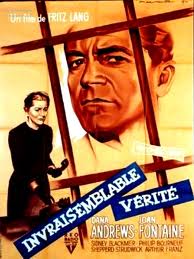
" invraisemblable ou pas, crois-moi, c'est la vérité -et il n'y en a pas deux ..."